About Vouch
Our history, the logic behind the site, and how to use it effectively
Why We Built This Site
The people who built this site have both been professional musicians
for over fifteen years.
We built this website partially because when hiring
for highly-skilled gigs it would be helpful to know whether someone is truly great
at a skill or “just okay.” We’re both expert pianists, but just proficient guitarists–
we wanted people who are hiring to have an accurate sense of what we’re good at.
Similarly, we have been in many hiring positions where it would have been extremely helpful to have this type of data– we have both been encouraged to hire the wrong musicians who were truly excellent in one skillset (say, improv) but too inexperienced in another (say, sightreading).
Why We Think It's Useful
The benefits of this site for musicians: a clear, easy way to showcase your skills in very specific categories to potential hirers, and a way to get people who know your work to vouch for you. This site can act as a public portfolio that clearly organizes your skills, experiences, and vouches in one place.
The benefits for hirers: if you need a pianist who's great at sightreading, capable in jazz, excellent at accompanying, a good teacher, and also decent at Sibelius notation-- you can find that exact right musician on this platform. Post a gig, set your requirements, and get a combination of direct applications from musicians as well as automatic recommendations of other musicians who would be a perfect fit.
We want to give musicians a simple platform to showcase their unique abilities, and give hirers a clear, easy way to discover musicians who fit their exact needs.
The Rating System
Here’s a walkthrough of what the skill level numbers mean:
| Rating | Level Title | What It Means |
|---|---|---|
| 10 | World-Class Expert | Genuinely one of the very best in the world at this skill. In a room full of experts at this skill, they would all agree that you’re in consideration for one of the very best. This may correspond with technical ability, but a variety of factors should be considered. Likely a household name among people who are familiar with the skill. |
| 9 | ||
| 8 | Expert | Capable of performing in a variety of elite settings (Broadway, professional orchestras, major tours, etc) and playing the high-level literature associated with those settings. Other genuine experts in the field would be willing to vouch for your expertise. |
| 7 | ||
| 6 | Beginner Professional | Professional-level skills, enough to be considered regularly for professional gigs. |
| 5 | Advanced | Excellent skills but still in need of training and experience before becoming a regular performing professional. This is likely the highest rating an undergraduate student should select in any instrument, skill, or genre, with rare exceptions. |
| 4 | ||
| 3 | Proficient | Comfortable with intermediate repertoire. |
| 2 | ||
| 1 | Beginner | Basic skills; decent enough to be considered for this instrument as a secondary skill (e.g., “we need an expert pianist who can also play a short song on ukulele”). |
What Level Should I Choose?
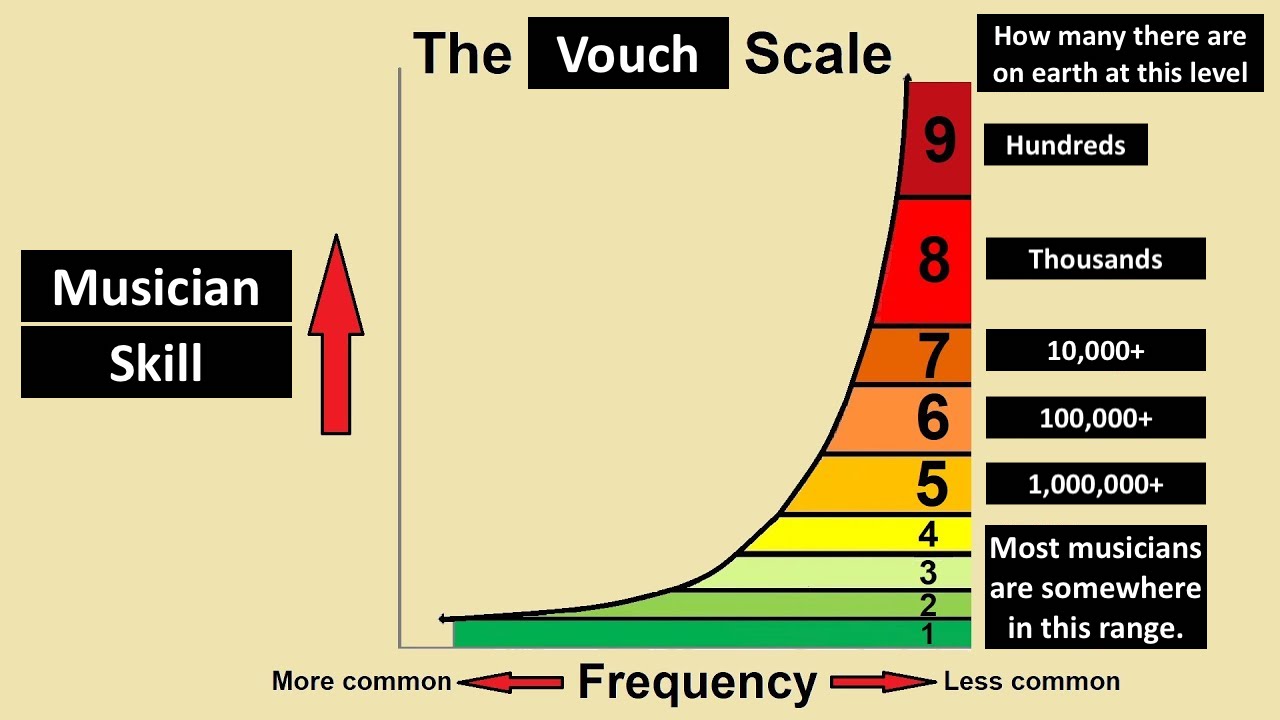
We think of it somewhat like the Richter scale for earthquakes, where each higher level has exponentially (logarithmically?) fewer musicians; there might be one million “advanced” pianists at a 5, but only 100,000 beginner professionals at a 6; that’s a difference of 900,000, which is really substantial.
With all of that being said, we want people to avoid higher ratings unless they really mean it; this is part of why we give search and hiring priority to people who provide proof of their skills.
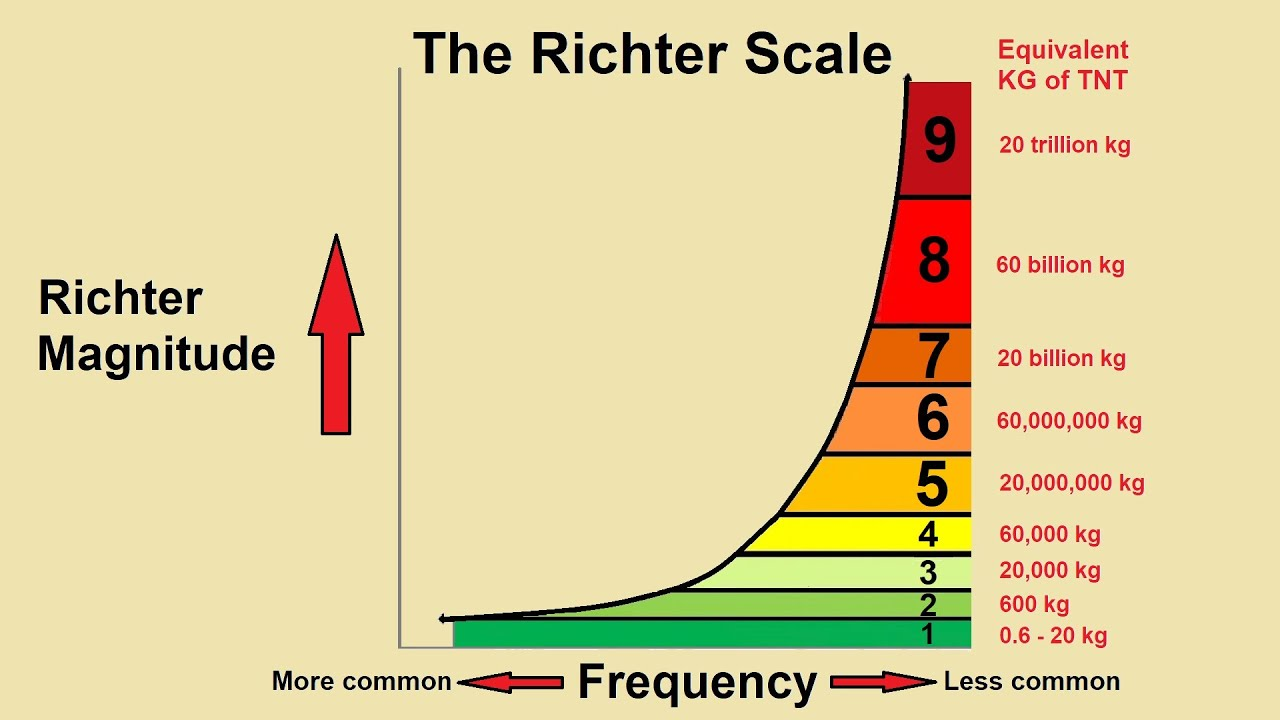
If we repurposed the Richter scale to fit our website, it might look like this:
The Philosophical Problem with Rating Artists
We think it’s important to note that most measurements of art are deeply contextual:
- Whitney Houston would not be considered “the best singer” at the Met
- Pavarotti would not have done well in the original cast of Rent
- Freddie Mercury would probably struggle to sing Eric Whitacre
And so on. And all of those listed are within European/American art and pop music, to say nothing of the specific skills for classical and popular music in other cultures. There is no objective “best,” really.
On the pragmatic side, it’s helpful to know whether the pianist you’re hiring to play auditions is able to sightread. It’s possible to estimate skill level when hiring– we have to do it all the time. Some violinists struggle to play in tune. Some pianists don’t have the technical skill to play Rachmaninoff and/or Sondheim. This website is codifying skill estimations which are already an expected part of the hiring process.
The Scaling Problems
The Technic Problem
We know pianists who have performed Rachmaninoff concertos with professional orchestras but who are only okay at sightreading and have no skill at improvisation. Are they expert pianists?
The Reading Problem
Contemporary music education places an extreme value on music literacy, but some of the best musicians in history simply could not read music. Can someone be an expert pianist without being able to read?
The Instrument-Skill-Ceiling Problem
There are many more piano players than there are theremin players. It is arguably harder to become a violin expert than it is to become a piano expert. Chris Thile is arguably the best mandolinist on earth, but there are relatively few mandolinists to compete with him and he has demonstrated expertise in pretty much every genre– but who is the best pianist on earth? What does that even really mean?
The Self-Awareness Problem
It's difficult to accurately estimate your own skill level. We think that the rating system makes it easier to get in the ballpark of accuracy, but it is always tough to effectively self-assess. We reward proof of ability with higher visibility in search results.
We don’t think there’s an easy answer to the overall instrument rating. We made this website to make hiring and searching for jobs easier, so all we ask is that you be honorable and honest, and occasionally you may get the feedback that you’ve selected incorrectly.
It’s Okay to Hire “Low-Skill” Musicians
The term “professional” starts showing up at level 6, but plenty of musicians who play at a 5 or below are perfectly capable of playing professionally.
One of the creators of this site was in the running to MD and play for an equity national tour which required them to play exclusively accordion and drum set for the show. Their skill on accordion was at a 2 and for drums was at a 3, but that was enough for this particular show in combination with expert piano skills for running rehearsals.
How Do I Prove My Sightreading Skills?
Find some new music in a style you feel good about, then set up your phone and record yourself playing it. The entire process, including uploading to YouTube, should take less than 30 minutes.
There’s no way for a person watching your video to confirm that you’re actually sightreading, but we’re trusting that the people who use this site will have integrity and be honest about their skills.